

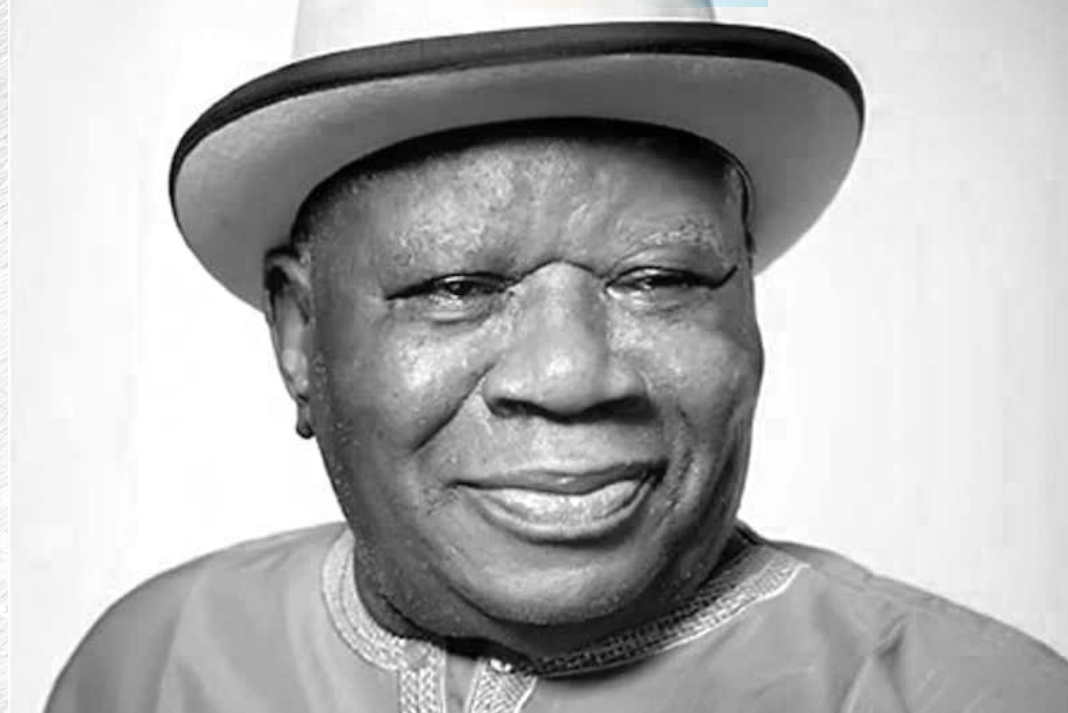
Chief Edwin Kiagbodo Clark was born on May 25, 1927, in Kiagbodo, Delta State, Nigeria. His early education began at the African Church School, Effurun Otor, before he proceeded to the Government Teacher Training College, Abraka, where he trained as a teacher from 1949 to 1953. Seeking greater knowledge and expertise, he later travelled abroad to study law, a decision that set him on a path to national prominence in politics and advocacy. His unwavering commitment to education culminated in the establishment of Edwin Clark University in 2015, an institution aimed at providing higher learning opportunities to young Nigerians, particularly those from the Niger Delta region.
Clark’s political journey commenced in 1953 when he was elected as a councillor for Bomadi. Over the decades, he held several key government positions, including serving as the Federal Commissioner for Information under General Yakubu Gowon’s administration from 1967 to 1975 and later as a senator in Nigeria’s Second Republic in 1983. As a political leader, he was deeply involved in governance, policy formulation, and advocacy for the rights of marginalized regions, particularly the Niger Delta. His tenure as Federal Commissioner for Information was marked by a significant role in shaping Nigeria’s media landscape and government communication strategies, particularly during and after the Nigerian Civil War. He was instrumental in managing government propaganda and public information, countering secessionist narratives from Biafra while reinforcing the government’s position on national unity. Moreover, he played a crucial role in promoting the ‘3Rs’ policy—Reconstruction, Rehabilitation, and Reconciliation—ensuring war-affected regions, particularly in the South-East, were reintegrated into the nation’s fold.
Under his stewardship, Nigeria’s national broadcasting infrastructure saw significant expansion. The government strengthened state-controlled media, broadening the reach of radio and television broadcasting, laying the foundation for the eventual creation of the Nigerian Television Authority (NTA) in 1977. Additionally, he was a strong advocate for resource control, voicing concerns about the Niger Delta’s underdevelopment and the need for a fair revenue-sharing system. His influence extended beyond Nigeria’s borders as he played a pivotal role in shaping how the war and post-war governance were perceived internationally by foreign governments and global organizations.
A relentless advocate for the Niger Delta, Clark championed economic justice, resource control, and regional development. His efforts contributed to an increase in the derivation formula, which eventually rose from 1.5% to 13% under the 1999 Constitution. His persistent advocacy influenced the establishment of the Niger Delta Development Commission (NDDC) in 2000, aimed at addressing the region’s infrastructural and economic challenges. As the founder and leader of the Pan Niger Delta Forum (PANDEF), he played a crucial role in the Niger Delta Amnesty Program of 2009, which successfully reintegrated former militants into society, leading to a significant reduction in regional violence. Beyond his political activism, he prioritized education and youth empowerment by founding Edwin Clark University to provide quality education and professional development. Furthermore, he was a fierce critic of multinational oil companies, holding them accountable for environmental degradation caused by oil spills, gas flaring, and pollution, and advocating for stricter regulations and corporate responsibility.
Throughout his career, Clark significantly shaped discussions on constitutional reforms, advocating policies aimed at fostering a more equitable Nigeria. He was a strong proponent of restructuring, emphasizing the disadvantages of the current federal structure for resource-rich yet underdeveloped regions like the Niger Delta. As a delegate at the 2014 National Conference, he championed regional autonomy and fiscal federalism. He was also instrumental in pushing for greater oil revenue allocation to oil-producing states, influencing constitutional discussions on derivation funds and revenue-sharing formulas. His stance against political dominance by the North remained firm as he continuously advocated for fairer representation of the South-South region in national governance. He also challenged corrupt practices and called for greater transparency in governance, warning against the hijacking of democratic institutions by vested interests.
Chief Edwin Clark’s legacy is one of resilience, leadership, and unwavering advocacy. His contributions reshaped Nigeria’s political landscape, influenced Niger Delta development, and left an indelible mark on constitutional reforms. He was a crucial figure in elevating the Niger Delta’s struggle for justice and equitable resource control, shaping debates on constitutional amendments and restructuring, contributing to Nigeria’s post-war recovery and governance policies, and establishing educational institutions to empower future generations. A staunch advocate for good governance, transparency, and democracy, his impact continues to inspire generations. His passing on February 17, 2025, at the age of 97, marks the end of an era, but his influence and legacy remain alive in the hearts of those who continue his fight for justice, equity, and development in Nigeria.