

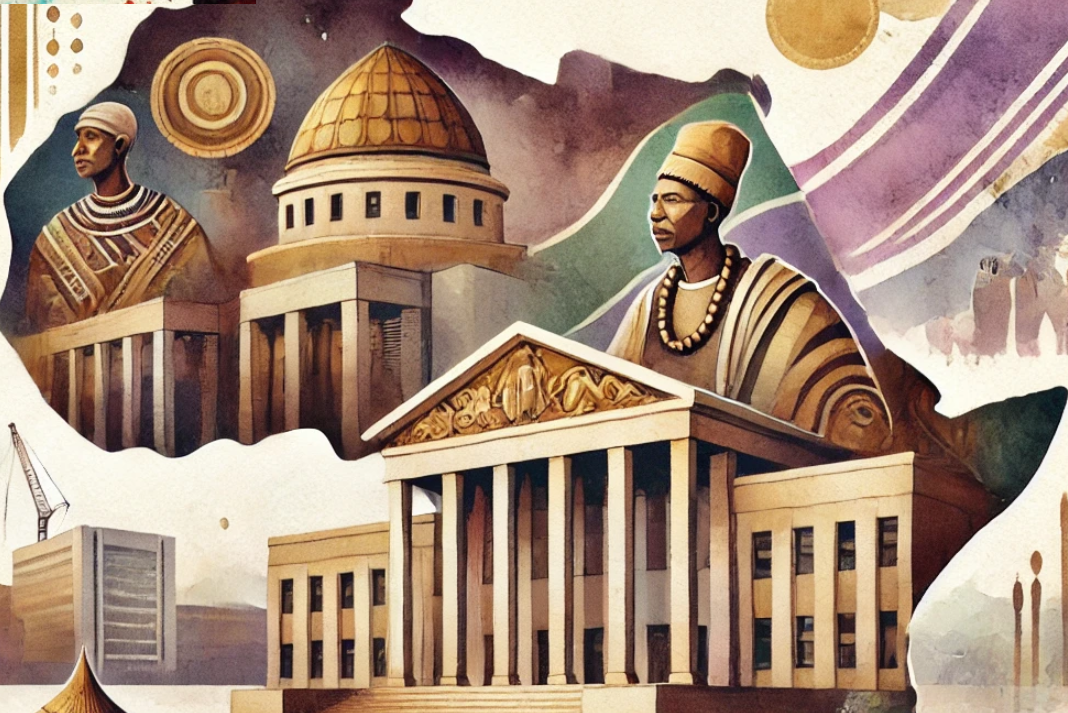
For centuries, kings, chiefs, and elders have exercised significant influence across Africa, existing in parallel—and sometimes in tension—with state governments. While many see these indigenous leaders as remnants of a bygone era, others view them as champions of a locally grounded, community-driven model of governance that questions the viability of Western-style systems imposed under colonial rule. The true debate, then, is not whether these authorities should persist, but rather how they fit into modern legal and political frameworks.
Well before Europe’s partition of the continent, African societies operated under robust systems rooted in consensus-building, communal justice, and spiritual authority. In regions like West Africa, the Ashanti Kingdom thrived under a network of local chiefs, while in Southern Africa, the Zulu and Xhosa operated through hierarchical yet consultative processes. Colonial administrations, however, either co-opted or dismantled these native structures. The British often absorbed traditional rulers into imperial governance, stripping them of independent legitimacy, whereas the French largely replaced indigenous authority with centralized, foreign-led bureaucracies.
As a result, newly independent African states emerged saddled with political systems mismatched to existing social structures. Traditional leadership did not fade; instead, it adapted to coexist with state institutions—sometimes as a complement, other times as a competitor.
Today, traditional leaders wield considerable authority in many rural communities, tasked with managing land rights, adjudicating disputes, and preserving cultural values. The extent of their power varies widely and is often codified in national constitutions or laws:
- South Africa: Traditional leaders hold advisory positions within governance structures, embodied by the National House of Traditional Leaders. Friction arises when customary norms clash with democratic mandates, such as equal rights for women or land reform.
- Ghana: Chiefs oversee communal lands and resolve conflicts via customary courts. The National House of Chiefs consults with government on policy matters, illustrating how traditional councils can shape land tenure and cultural preservation.
- Nigeria: Northern Emirs command significant religious and social sway. Although not constitutionally empowered, they play a vital role in security and grassroots mobilization, often filling gaps where elected officials have limited influence.
- Botswana: Traditional leadership is integrated into the national governance framework through the House of Chiefs (Ntlo ya Dikgosi), ensuring that customary laws remain significant in the legislative process.
Critics argue that hereditary succession conflicts with democratic principles, raising concerns about lack of accountability, nepotism, or political collusion. Land management stands out as a primary dispute, particularly in countries like Kenya and Zimbabwe, where tensions escalate over communal land allocations to foreign investors. Gender equity is also a contentious issue, with conservative practices in certain regions limiting women’s rights.
Despite these challenges, productive collaborations between traditional and state-led governance do exist. In Rwanda, Abunzi mediators draw on longstanding practices to settle disputes, easing pressure on conventional courts. Similarly, Namibia’s use of traditional councils in partnership with local governments has stabilized land claims in ways that might otherwise spark significant conflict.
As African governance evolves, traditional leadership remains central to discussions about the continent’s political future. Policymakers must reconcile the grassroots legitimacy of these systems with democratic ideals like transparency and inclusivity. Achieving this balance is less about dismantling tradition and more about recalibrating it to benefit modern nation-states.
In essence, decolonising authority involves recognizing that kings, chiefs, and elders are not merely remnants of another era, but vital partners in addressing local needs. By integrating indigenous forms of leadership into contemporary frameworks, Africa may offer a compelling blueprint for regions worldwide that are grappling with how best to weave historical legacies into present-day governance.